Introduction
Large language models are undeniably reshaping language technology. Yet as models are claimed to "support X languages", the research community still lacks clear answers to core questions, such as What does multilinguality really mean, and how should we evaluate it? Counting languages in training data or translating benchmarks likely isn't enough. Multilingual evaluation today suffers from duplicated efforts, inconsistent practices, limited comparability across works, and general poor understanding of theoretical and practical problems.
Workshop on Multilingual and Multicultural Evaluation (MME) aims to bring the community together with three goals:
- Create a dedicated venue for multilingual evaluation resources and methodology.
- Advance and standardize evaluation practices to improve accuracy, scalability, and fairness.
- Integrate cultural and social perspectives into multilingual evaluation.
Program Schedule
Click HERE for the full proceedings!
We have a half-day program on 28th March 2026. All times are in Morocco local time (UTC+1):
- 14:00-14:10 Opening
- 14:10-14:50 Talk by Freda Shi
- 14:50-15:30 Talk by Sebastian Ruder
- 15:30-16:00 Coffee Break
- 16:00-16:40 Talk by Shaomu Tan
- 16:40-16:50 Awards
- 16:50-17:30 Poster Session
We are also thrilled to announce two awards:
- Best Paper Award: The Anthropology of Food: How NLP can Help us Unravel the Food cultures of the World by Arij Riabi, Sougata Saha, and Monojit Choudhury.
- Best Paper Honourable Mention: Vinclat: Evaluating Reasoning, Cognition and Culture in One Game by Marc Pàmies, Javier Aula-Blasco, Aitor Gonzalez-Agirre, and Marta Villegas.
Call for Papers▾
click to expand
We invite submissions on topics, including, but not limited to:
- Evaluation resources beyond English or Western-centric perspectives and materials
- Annotation methodology and procedures
- Evaluation protocols: ranking vs direct assessment, rubric-based vs reference-based vs reference-free, prompt variations, etc
- Complex and practical tasks: multimodality, fairness, long I/O, tool using, code-switching, literary, etc
- Sociocultural and cognitive variation affecting the use and evaluation across languages
- Scalable evaluation of cultural and factual knowledge
- Efficient evaluation of a massive number of languages and tasks
- Metrics, LLM judges, and reward models
- Standardization in reporting and comparison of multilingual performance
- AI-assisted evaluation: data, methods, metrics, and standards
- Other position, application, or theory contributions
We welcome both archival and non-archival papers, resulting in presentations at the workshop. In addition, archival papers will be published in ACL Anthology. An archival submission cannot be under review or accepted at another archival venue. ARR-reviewed papers can be directly committed.
All archival submissions must follow the ACL style guidelines and be anonymized for double-blind review. Short papers may have up to 4 pages and long papers up to 8 pages, excluding references and appendices. Upon acceptance, one additional page will be allowed for the camera-ready version. Non-archival submissions have no formatting or anonymity requirements.
Please submit your work by December 19 2025 through this link. ARR (meta-)reviewed papers can be committed by January 5 2026 using this link.
Key Dates ▾
click to expand
All deadlines are 11:59PM UTC-12:00 ("Anywhere on Earth").
- Direct submission deadline: December 19 2025, direct submission link
- ARR-reviewed paper submission deadline: January 5 2026, commitment link
- Notification of acceptance: January 23 2026
- Camera-ready deadline: February 3 2026
Speakers
 Freda
Shi
Freda
ShiUniversity of Waterloo From Preferences to Proficiency: Evaluating Native-like Quality of LLMs
 Sebastian
Ruder
Sebastian
RuderMeta Toward Explainable, Robust, and Actionable Translation Quality Estimation
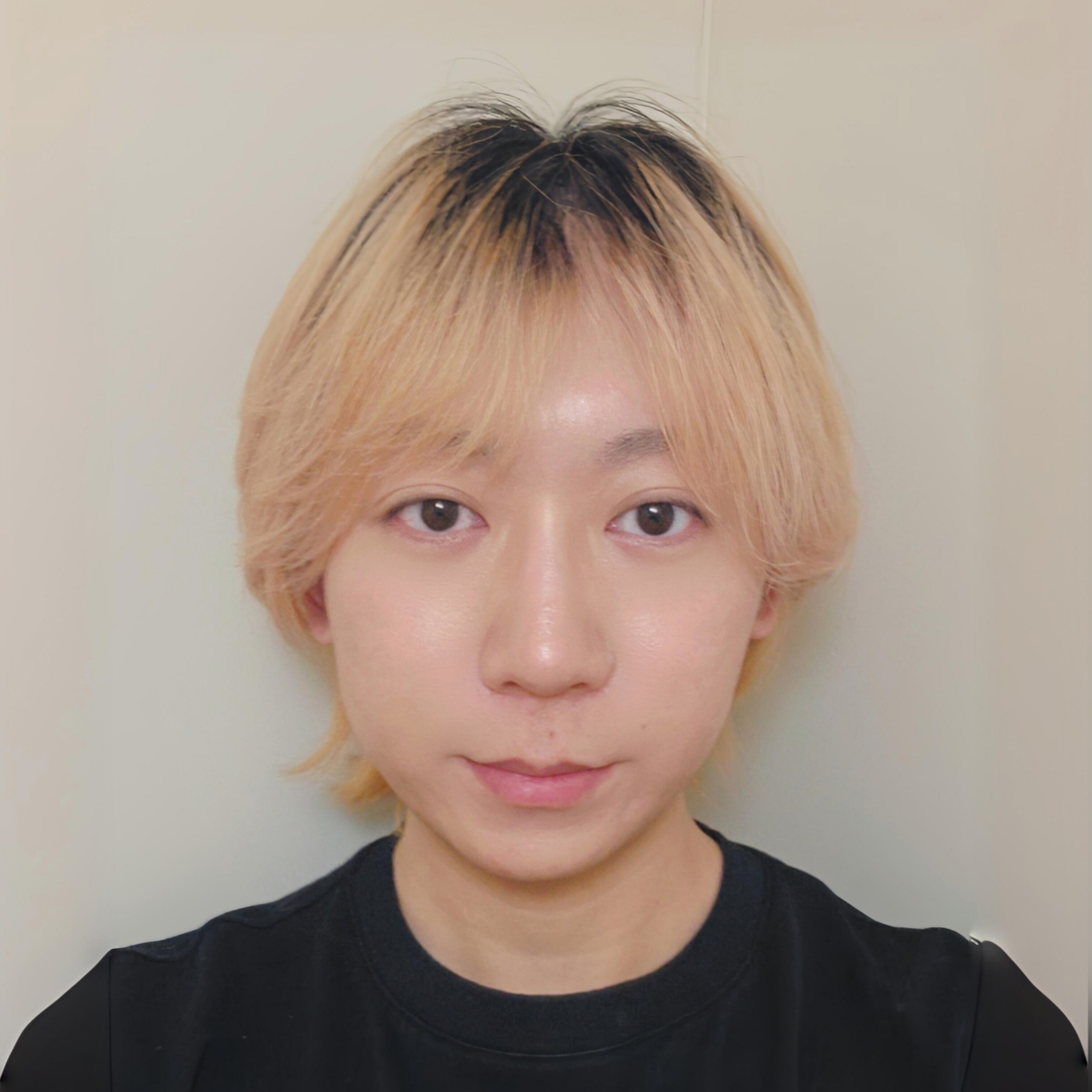 Shaomu Tan
University of Amsterdam
Organizers
 Pinzhen
Chen
Pinzhen
ChenQueen's University Belfast
 Vilém
Zouhar
Vilém
ZouharETH Zurich
 Hanxu
Hu
Hanxu
HuUniversity of Zurich
 Simran
Khanuja
Simran
KhanujaCMU
 Wenhao
Zhu
Wenhao
ZhuByteDance
 Barry
Haddow
Barry
HaddowUniversity of Edinburgh
 Alexandra
Birch
Alexandra
BirchUniversity of Edinburgh
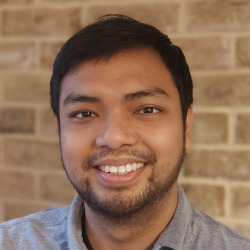 Alham Fikri
Aji
Alham Fikri
AjiMBZUAI
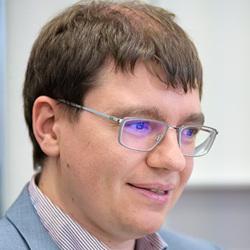 Rico Sennrich
University of Zurich
 Sara
Hooker
Sara
HookerAdaptable Intelligence
Please reach out to mme-workshop@googlegroups.com with any questions or inquiries. This workshop follows ACL's Anti-Harassment Policy.
Program Committee
- A B M Ashikur Rahman (King Fahad University of Petroleum and Minerals)
- Ahrii Kim (Soongsil University)
- Aishwarya Jadhav (University of California, Berkeley)
- Ashok Urlana (International Institute of Information Technology, Hyderabad)
- Bhavitvya Malik (University of Edinburgh)
- Dayyán O'Brien (University of Edinburgh)
- Esther Ploeger (Aalborg University)
- Houda Bouamor (Carnegie Mellon University, Qatar)
- Jacqueline Rowe (University of Edinburgh)
- Junxiao Liu (Nanjing University)
- Koel Dutta Chowdhury (Saarland University)
- Laurie Burchell (Common Crawl Foundation)
- Lorenzo Proietti (Sapienza University of Rome)
- Mateusz Klimaszewski (Warsaw University of Technology)
- Nikita Kiran Yeole (Virginia Tech)
- Nikita Moghe (Amazon)
- Niyati Bafna (Johns Hopkins University)
- Ona de Gibert (University of Helsinki)
- Peter Devine (University of Edinburgh)
- Pinzhen Chen (Queen's University Belfast)
- Shehenaz Hossain (Munster Technological University)
- Shenbin Qian (University of Oslo)
- Sherrie Shen (University of Edinburgh)
- Songbo Hu (University of Cambridge)
- Stefano Perrella (Sapienza University of Rome)
- Vilém Zouhar (ETH Zurich)
- Xu Huang (Nanjing University)
- Yogen Vilas Chaudhari (PowerSchool)
- Zheng Zhao (University of Edinburgh)
- Zhijun Wang (Nanjing University)